SANCTUARY BY THE SEA
Yoga Therapy in Healthcare
A 300-Hour Foundations Training
For healthcare professionals and experienced yoga practitioners serving people in nursing homes, hospitals, and veteran care centers.
Founding cohort, January through December 2027
Apply NowHow do we support the whole person, and not just the diagnosis?
If you are reading this, chances are you already work in care.
You may be a yoga teacher. You may be a nurse, a bodyworker, a physical therapist, a recreation specialist, a social worker, a mental health professional. You may love your work and still feel the limits of the system you are working inside. You know what the chart says. You also know what you saw, and how little of it fit on the form.
This training is for the part of you that keeps asking a different question. What quality of life?
Empowerment, agency, faith, belonging. Yoga reaches all four.

What this credential is, plainly
This is a 300-Hour Foundations training. Completing it does not certify you as a Yoga Therapist and it is not the C-IAYT credential. I want you to know that before you read another word, because there are programs that blur this and I am not going to be one of them.
What it does is build a professional foundation for people who already hold a license or a teaching credential and want to bring Yoga into the setting where they already work, safely and in a way an administrator can say yes to.
The structure is 255 live instructional hours and 60 supervised practicum hours, 315 in all, mapped across the five IAYT competency sections and exceeding the 300-hour minimum.
The cohort runs twelve months. If life requires more time from you, and for a working clinician it sometimes does, you have twenty four months from your cohort start date to finish your practicum and any outstanding requirements.
Three settings
The clinical focus of this program is narrow, and that is deliberate. These are the places where people spend the longest stretches of their lives inside a system, and where the least attention gets paid to anything a chart cannot hold.
Nursing homes and long term care
How the building actually runs. The interdisciplinary team, the care plan meeting, activities and recreation therapy, the survey process, and where a Yoga Therapist fits into a schedule that is already full.
Hospitals
Recognition, precautions, and referral. Cardiac, stroke, and oncology patients are everywhere in hospital work, and you learn to be safe around them and to know exactly whose question it is.
Veteran care centers
Military culture, moral injury, and the specific reasons a veteran may not want to close their eyes or lie down among strangers. Trauma informed practice built for this population rather than borrowed from a general template.
You will learn to work as part of the interdisciplinary team. Yoga Therapy in these settings is integrated and adjunct care support. It sits alongside nursing, medicine, rehabilitation, social work, and chaplaincy, and it does not replace any of them. We do not train you to deliver direct intervention or to treat a diagnosed condition. Knowing exactly where that line sits is what allows a director of nursing to let you through the door.
Graduates take this work further than the three settings we train in. Some go into chiropractic and integrative practices, birth centers, pediatric programs, hospice, and caregiver support. The skills travel, because what you are learning is how to hold a therapeutic relationship inside a clinical system that was not built for one.
Fifteen modules, 315 hours
Mapped to the five IAYT competency sections, with each hour traceable to a section.
Foundations and ethics in regulated settings
Scope of practice inside a licensed facility, resident rights, consent, mandatory reporting, and the Vedic worldview underneath the work.
Dementia across the continuum
From early stage through late stage practice when language is gone. Behavior as communication, assessment without reliable self report, and what to do at four in the afternoon.
Veteran-centered practice
Combat trauma, moral injury, hypervigilance, and the culture of the population. Yoga Nidra taught with an understanding of what deep rest asks of a veteran.
The aging body
Sarcopenia, osteoporosis, kyphosis, joint replacement precautions, gait and fall risk, persistent pain, hypermobility, and honest range of motion goals.
Grief, dying, and moral injury
Anticipatory grief, ambiguous loss in dementia, being present with people who are dying and with the families who love them, and the warrior in moral crisis who is now eighty years old.
Getting the work funded
Regulatory literacy, care plan integration, proposals administrators read, veteran care pathways, contracting, liability, and rates.
315
hours
Exceeding the 300-hour minimum, mapped to all five IAYT sections.
Jan 2027
founding cohort
Running through December 2027 with a closing retreat and graduation.
Hybrid
delivery
Live online sessions and recordings, with in-person intensives at the shore.
60
practicum hours
In person, in an aging or veteran-serving setting, with an assigned faculty mentor.
A year of deep study
January through December 2027. Wednesday evenings live and online, plus a monthly weekend immersion.
January
Orientation, scope of practice, ethics, and the Vedic worldview. Presence comes before technique. We open with a teaching on Yoga as salutogenesis, the promotion of health rather than the management of disease.
February
Yoga psychology and trauma-informed nervous system care. Stress physiology and autonomic regulation, and the somatic practices that help a person feel safe enough for anything else to become possible.
March ★
Functional anatomy, biomechanics, pain science, and hypermobility. An in-person movement weekend. Adaptation for a body in a chair, a body in a bed, a body after surgery, a body that has forgotten it is safe to move at all.
April
Fascia and evidence-based movement. Documentation and interprofessional communication. Charting a clinical record will accept, and how to describe this work in language a medical director understands.
May ★
Ayurvedic foundations for clinical practice. Constitutional assessment, Agni, Ama, and dinacharya. On one day of this in-person weekend we cook, we talk while we chop, and we sit down and eat together. Ayurveda is difficult to absorb from a book about digestion.
June
Yoga philosophy, the kosha model, and the framework for health and disease. The map underneath everything else you have learned so far.
July
Grief, death, and the Vedic view of consciousness. Being present with people who are dying and with the families who love them. Grief that arrives long before a death, and grief that arrives after. Practicum midpoint review.
August
Intake and assessment methodology. Learning to see. Functional movement observation, breath observation, intake and interview, and building trust with someone already assessed by a great many strangers.
September
Adaptive sequencing, restorative, Yoga Nidra, and somatic therapeutics. Pranayama taught precisely, with attention to what the physiology can and cannot support.
October
Ayurveda applied in clinical settings. Constitutional thinking inside a facility that runs on a food service contract and a medication pass.
November
Therapeutic relationship, group education, and dementia across the continuum. Communication when language is leaving, sensory and somatic approaches, agitation and sundowning, and how to be with a person whose relationship to time has changed.
December ★
Veteran-centered practice. Professional practice and closing integration. Our closing retreat, three days in person. We integrate the year, we are witnessed by the people who walked it alongside us, and we graduate.
★ marks the months that require in-person attendance. Specific weekend dates will be posted here shortly. When a guest teacher confirms a live date, attendance at that session is required and a recording does not substitute.
Apply Now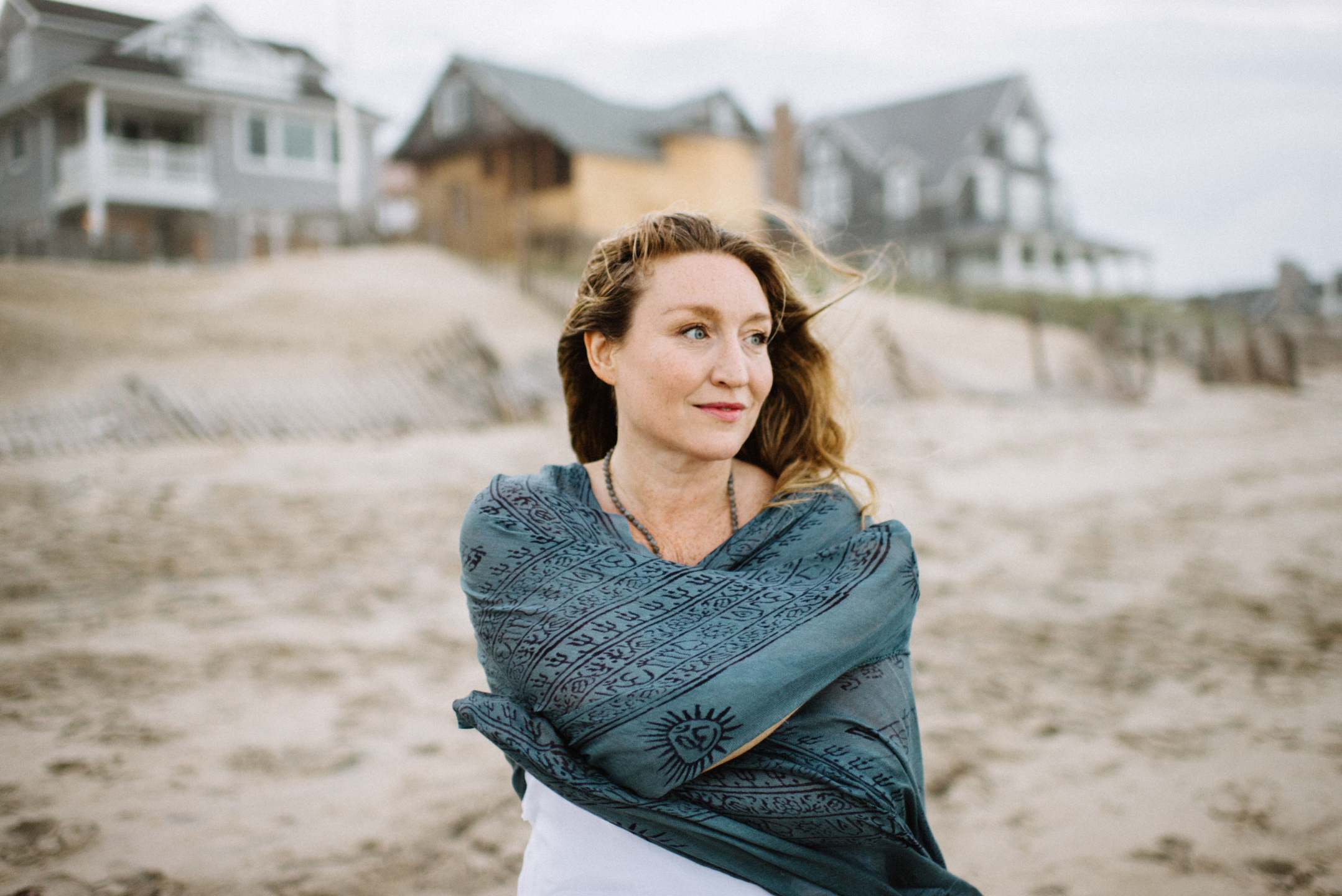
Who is teaching you
Jeanette Sealy, C-IAYT, LMT, E-RYT 500, YACEP, Ayurvedic Practitioner
I have practiced Yoga since 1997, which is coming up on twenty nine years, and I have spent most of my working life bringing it to people who are aging, ill, recovering, or dying.
Before Sanctuary, I worked in healthcare operations. I oversaw recreation therapy programs across New Jersey and worked in human resources, risk management, and survey readiness. That is an unglamorous history for a yoga person to have, and it is the reason I can tell you how a care plan meeting runs and what a surveyor is looking for when they walk onto your unit.
I am also an Air Force veteran, which is part of why the veteran-centered work in this program matters to me the way it does. I serve on the IAYT 300-Hour Foundations Task Force, helping shape the standards this field is writing for itself right now.
I built this training because I kept meeting people doing beautiful, careful work inside these systems with no framework to stand on, no supervision, and no way to explain to an administrator what they were actually doing. I wanted to hand them the thing I had to assemble for myself, slowly, over the length of a career.
Esteemed Guest Faculty
Six teachers, each holding a lineage, an expertise, and a level of depth and integrity you won't find elsewhere.
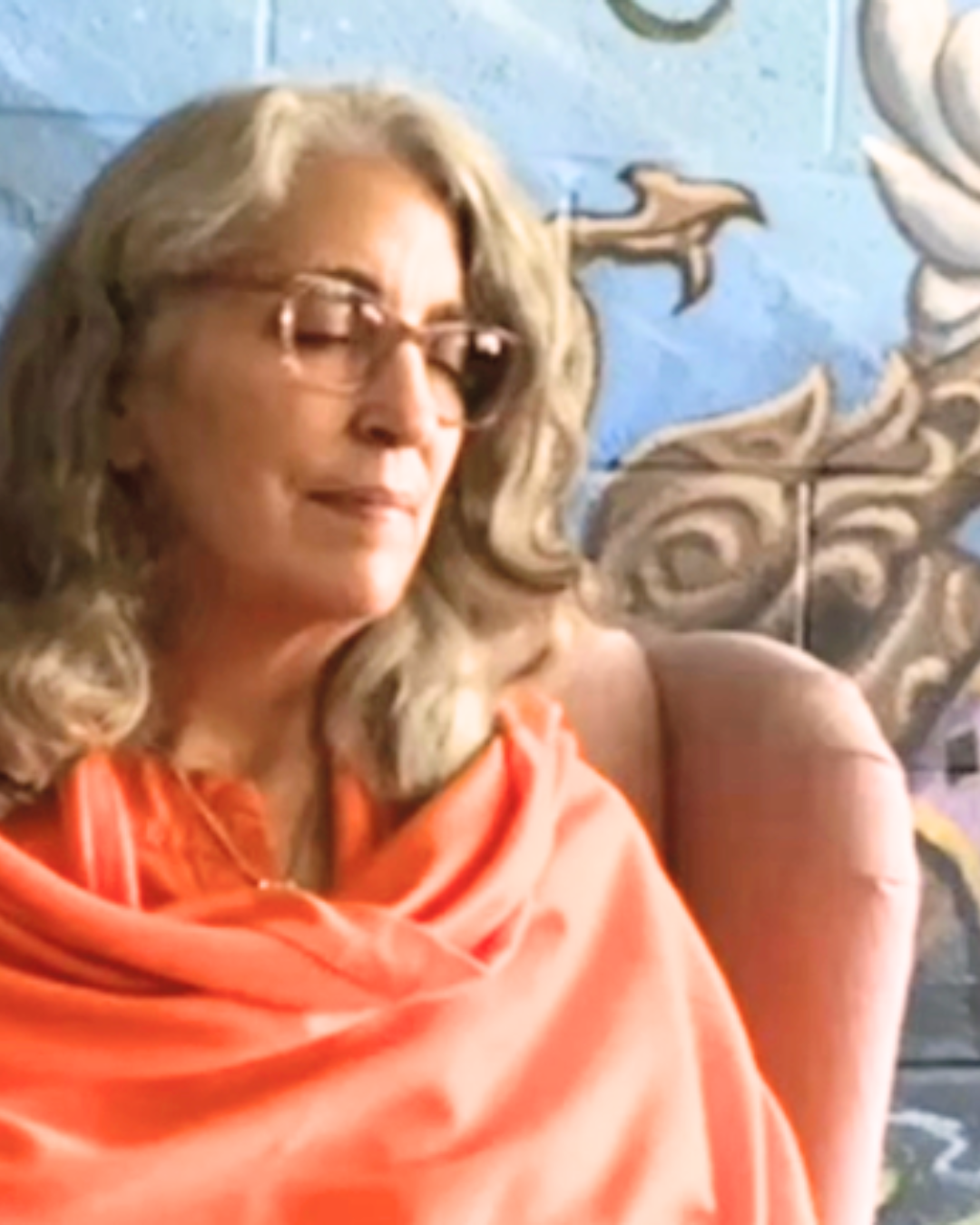
Swamini Shraddhananda Saraswati
End of Life Care, Grief, and Moral Injury
An initiated monk in the Saraswati lineage who authored two hospital-based yoga therapy programs and offered bedside spiritual counsel, then trained others to do the same.
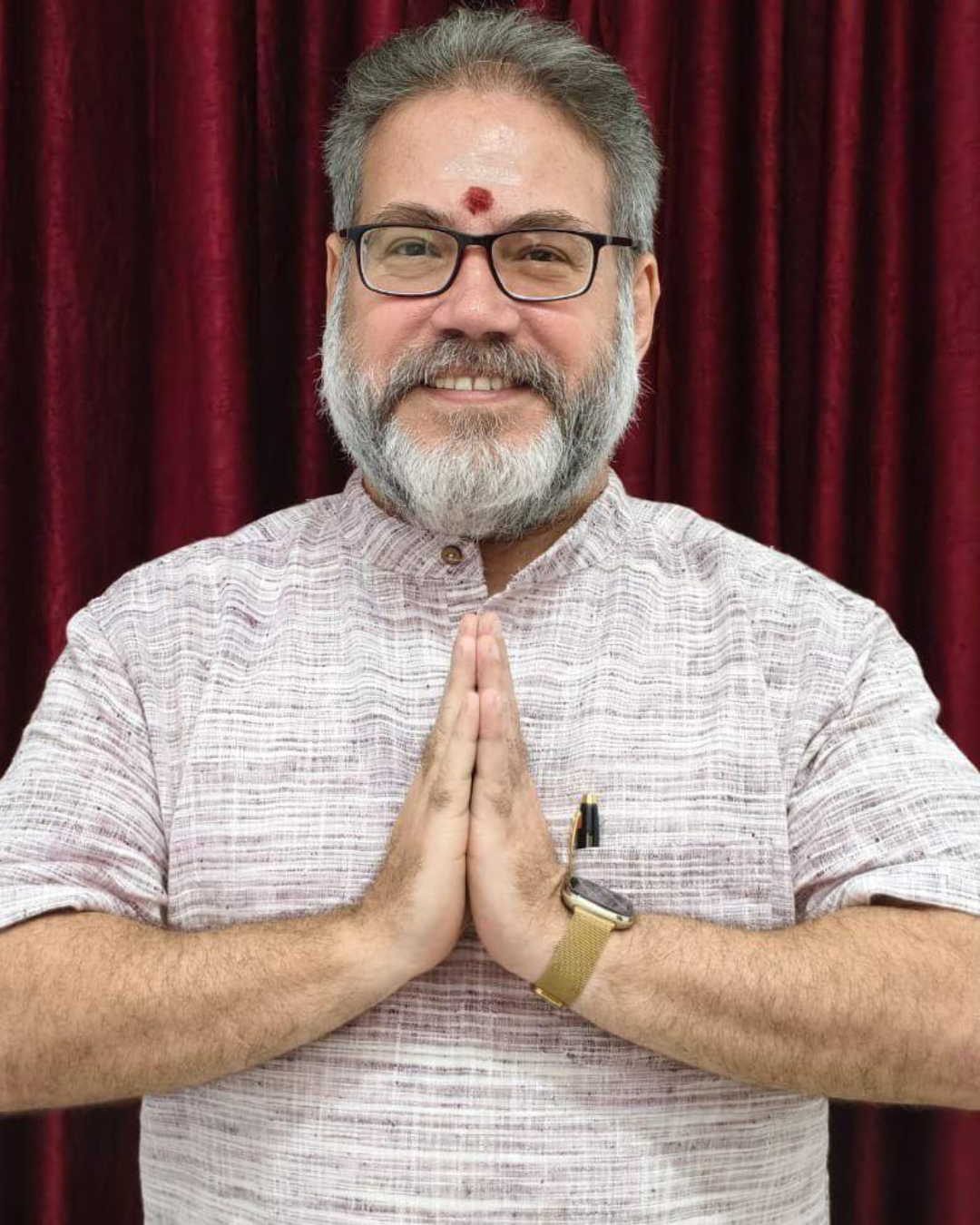
Dr. Ananda Balayogi Bhavanani
Yoga as Salutogenesis
Author of 35 books and more than five hundred published papers on yoga research. For him yoga is a means for the evolution of the human mind into further states of consciousness.
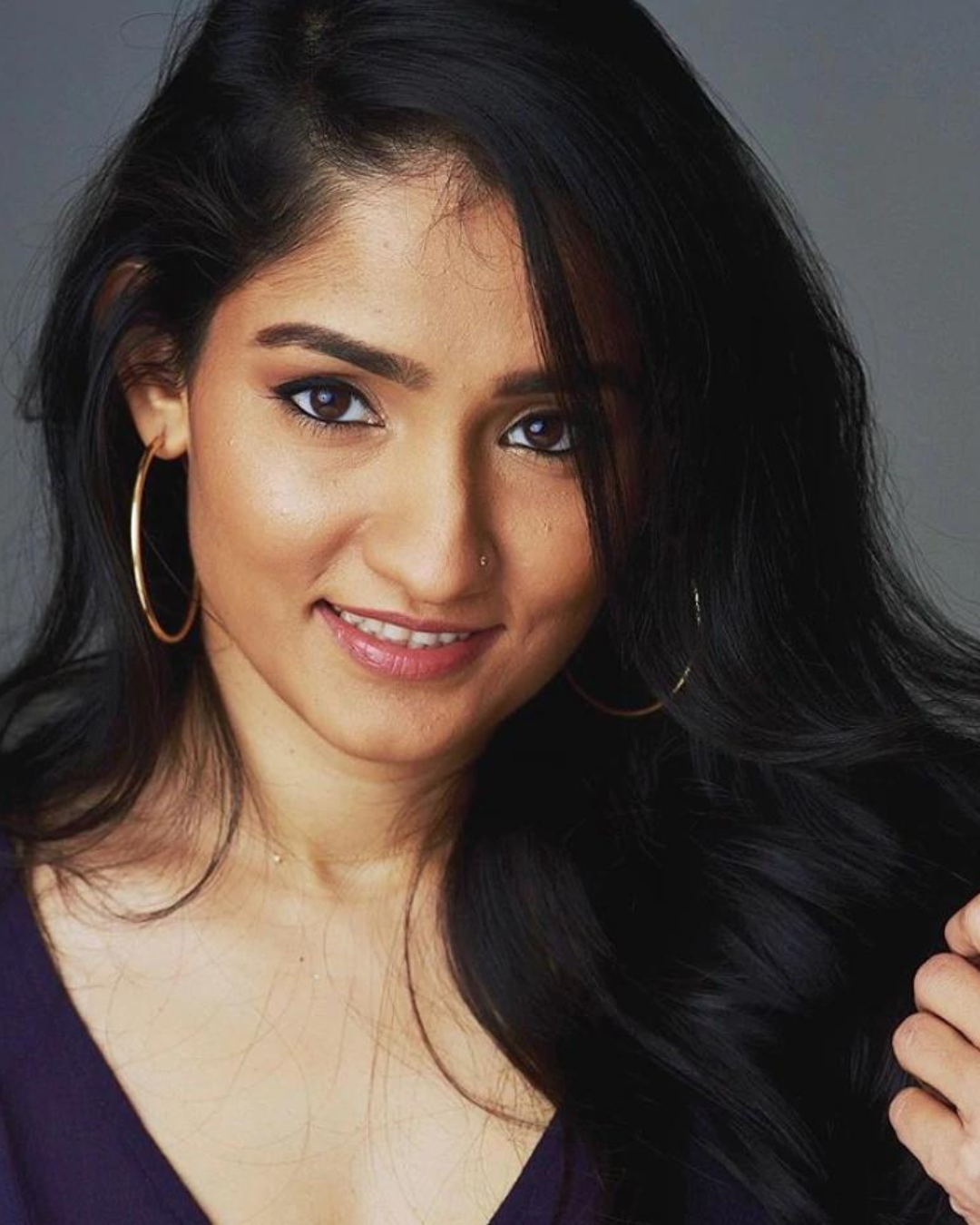
Nidhi Pandya
Ayurveda in Clinical Settings
A third-generation Ayurvedic practitioner and author of Your Body Already Knows. Ayurveda was not something she studied, it was something she was raised inside.
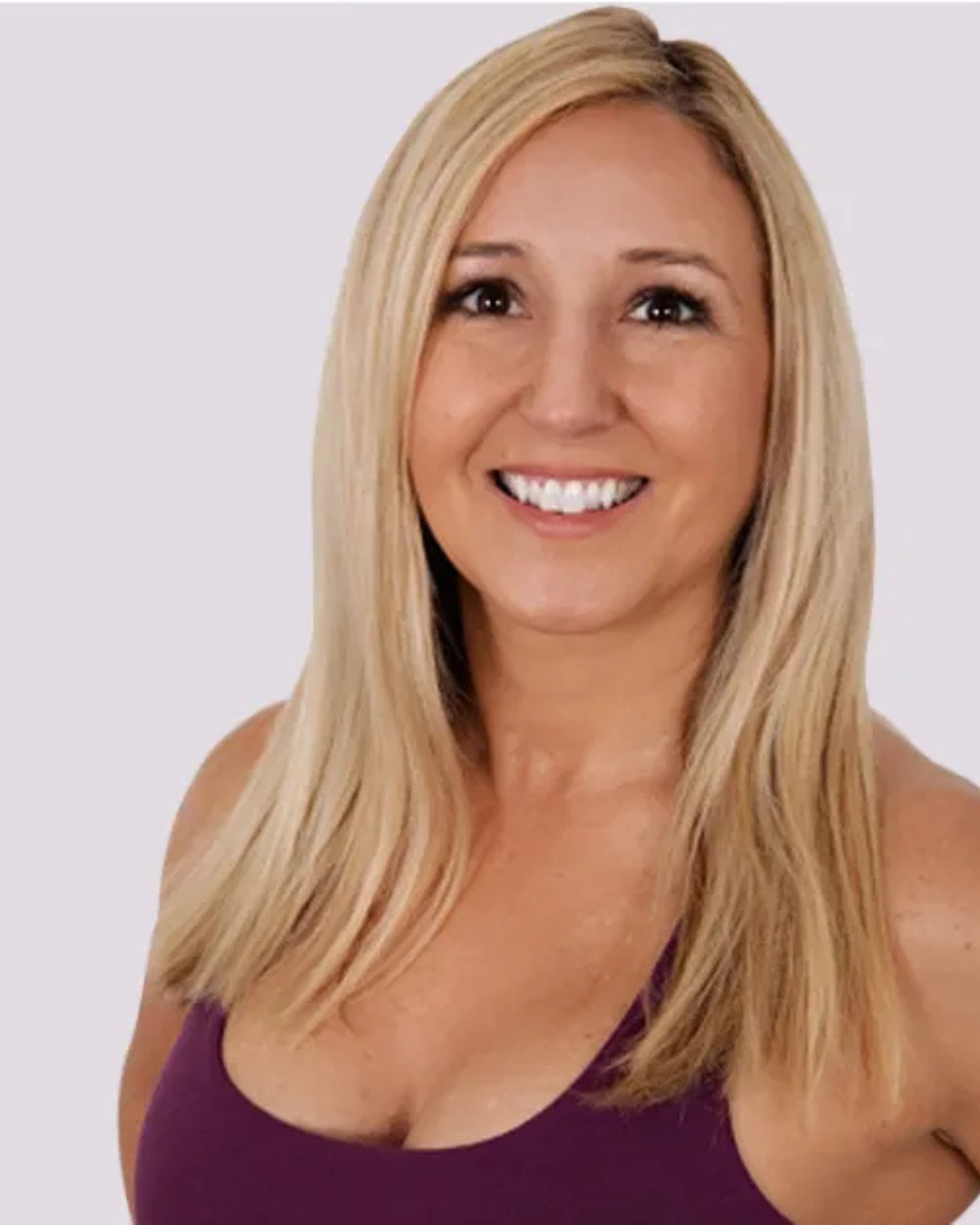
Jules Mitchell, MS
Yoga Biomechanics
Her graduate research on stretching and tissue adaptation changed how thousands of teachers understand the body. Her work on hypermobility matters enormously in clinical populations.
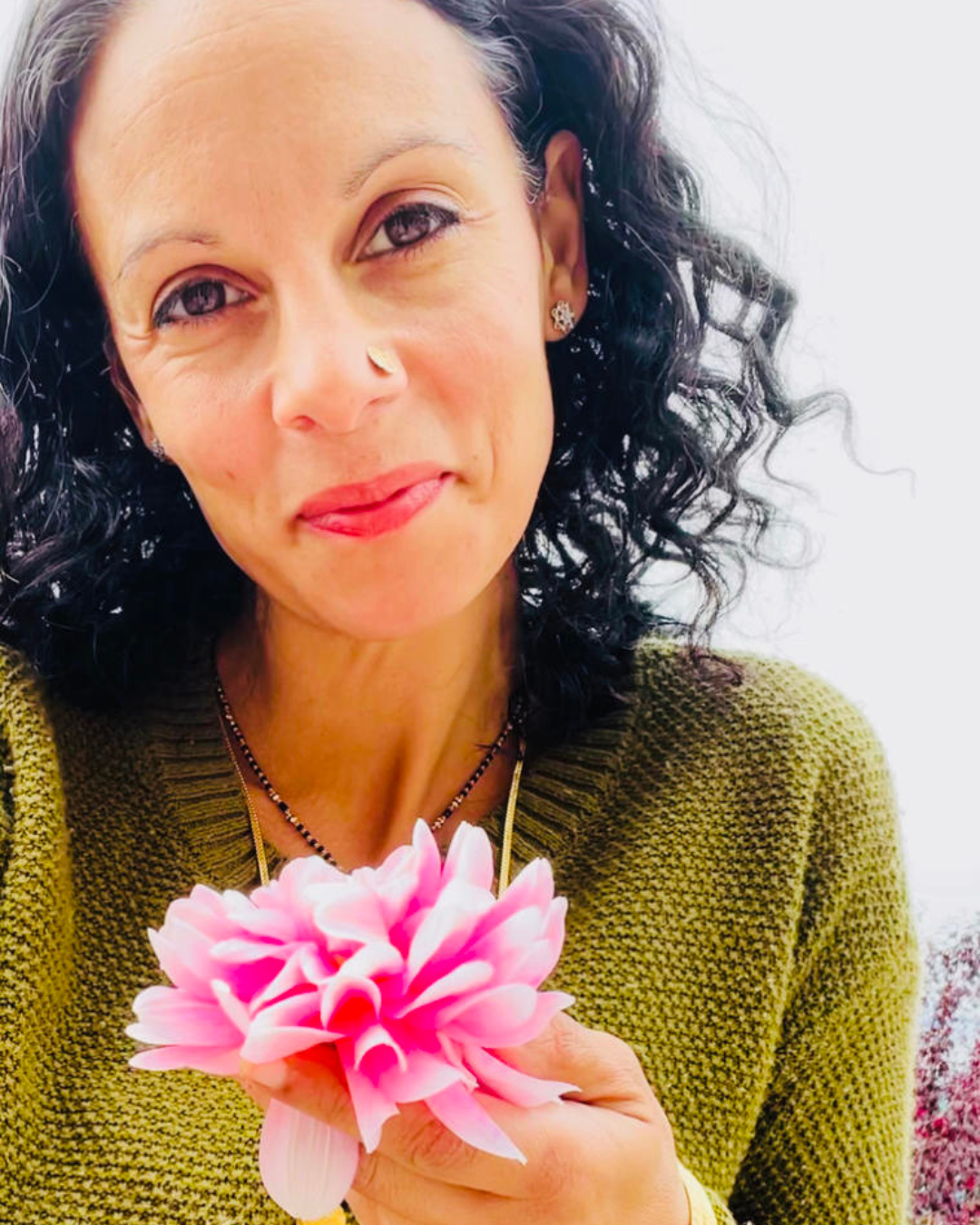
Kaya Mindlin
Supreme Release Yoga
Creator of a deeply somatic approach that works with the body's own intelligence. Students leave with a different relationship to their tissues and their capacity to let go.
Mike Rodriguez
Yoga Nidra and Veteran-Centered Practice
A retired Army Colonel and founder of Maha Sadhana who teaches Yoga Nidra as a practice of profound rest and inner listening.
What is included
- 255 live instructional hours with Jeanette and with guest faculty
- 60 hours of supervised, mentored practicum
- Weekly Wednesday evening sessions, live and online
- Monthly weekend immersions, hybrid
- Three in-person weekends and the three day closing retreat
- A printed workbook
- Assessment and plan of care templates built for clinical settings
- Yoga Nidra and meditation scripts you may use in your own work
- Session recordings for short term replay
- Mentorship, quarterly case review circles, and case supervision
- A private cohort community
- Immediate access to Alchemy of Trauma on enrollment
- Support finding a practicum placement
Travel and lodging are not included. Lodging for the closing retreat is booked and paid separately.
Enrollment
What it takes to join us
- Tuition is $8,000.
- Founding cohort tuition is $6,000, available through October 30, 2026.
- A $1,000 deposit reserves your seat and is applied in full toward tuition.
- Payment plans available.
- Work-study seats available for applicants with financial need.
If you decide this is not right for you before the cohort begins, your deposit becomes a credit toward anything else we offer, valid twenty four months. It does not disappear. If we cancel or postpone, your money is returned in full within thirty days.
The application is a conversation. Tell me where you work, who you serve, and what brought you to this. I read each one myself.
Apply Now
Questions people ask me
Do I have to be a yoga teacher?
Will this make me a certified Yoga Therapist?
Can I attend from outside New Jersey?
Where do I complete my practicum?
What if I need longer than a year?
What if I cannot afford the tuition?
Applications are open
Applications for the January 2027 founding cohort are open now. I read each one myself. If it looks like a good fit I will reach out so we can talk before you commit to anything.
If you are not sure whether this is right for you, apply anyway and tell me what you are wondering about. That is what the conversation is for.
Apply Now